Tar Seeps & Tar Pits
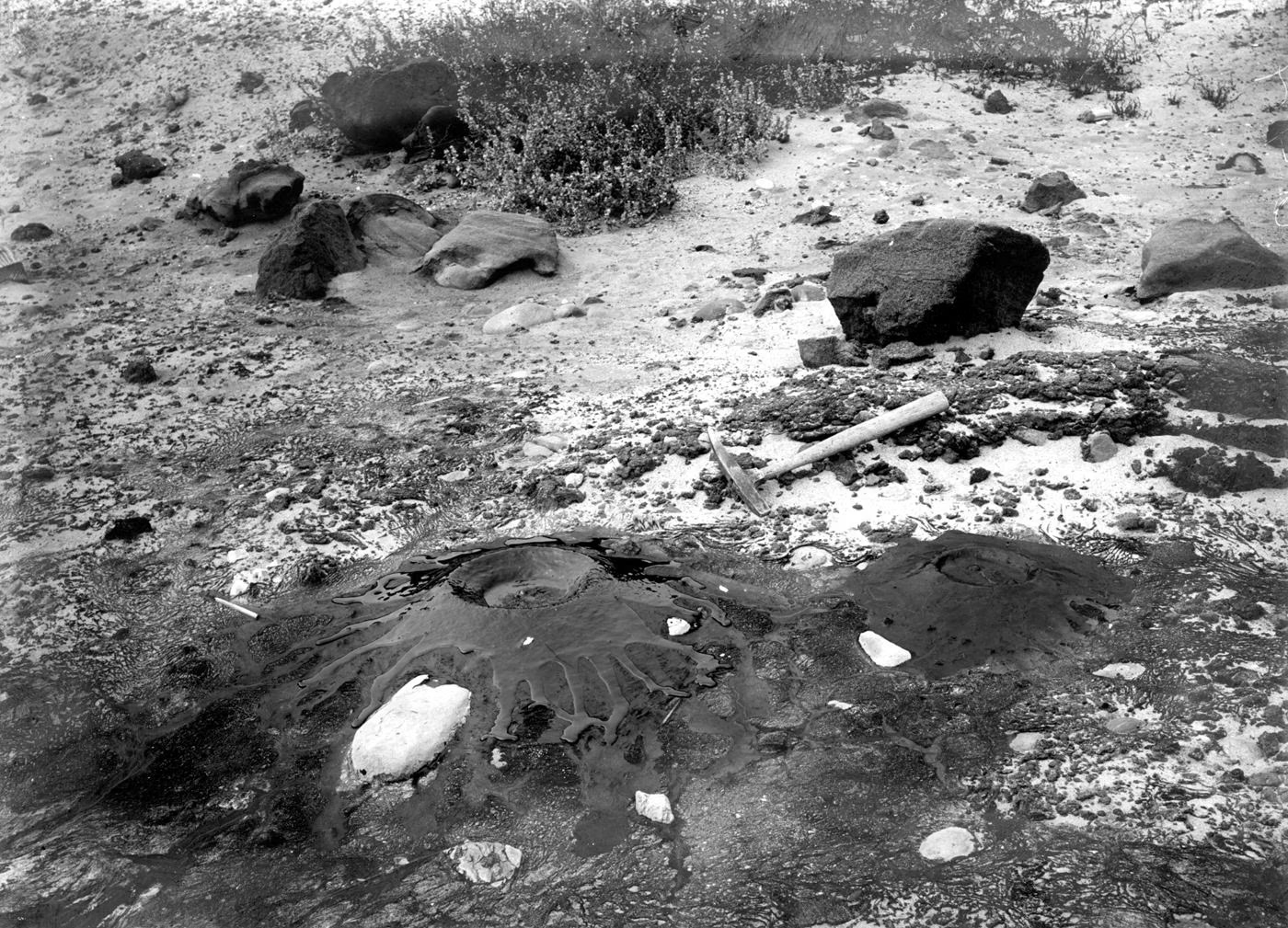
Carpinteria State Beach has several active natural tar seeps, the reason tar shows up on the sand here. The park's master plan says the most active seep is in the sea cliff near the park's eastern edge, about 20 feet above the beach, where liquid asphalt spills onto the sand on warm days. The Chumash used this asphaltum to seal their plank canoes.
The Tar Seeps at a Glance
Where the Seeps Are
Natural oil, gas and tar seeps are common along the Southern California coast, and the master plan counts several onshore seeps at Carpinteria State Beach. The most active is near the park's eastern boundary, just west of a seasonal drainage, visible in the face of the sea cliff about 20 feet above the beach. Smaller seeps come from cracks in the Monterey Shale outcrops elsewhere in the park.
The tar sands run from Carpinteria Creek east past the park boundary, through the City of Carpinteria's Tar Pits Park, between the beach and the railroad. The southern part of the San Miguel campground sits about ten feet above the beach on a terrace made of this asphalt deposit.
Why There Is Tar on the Beach
The master plan says the asphaltum that often washes up on the sand is an inconvenience to beachgoers. Natural seeps both onshore and offshore are the source.
The Tar and the Chumash
State Parks tells the story on its park page: in 1769 the Portolá expedition met the Chumash at the village of Mishopshnow near Carpinteria Creek and watched them build plank tomol canoes, using the natural asphaltum in their construction. That carpentry gave the town its name. The master plan adds that the Chumash also used asphaltum on baskets and for other purposes, and that asphalt was later mined here; after the State bought the land, 20,000 cubic yards of sand were brought in to fill the old mine and dump area.
Tar Pits Park (City of Carpinteria)
Tar Pits Park, east of the state beach, is a City of Carpinteria park named for its tar seeps. The city describes bluff-top views of the Santa Barbara Channel and the Channel Islands, hiking and biking trails and a few benches, with no other amenities. Access is remote, so the city suggests starting from the state beach campground or beach: walk southeast along the beach and climb the stairs. Its trails continue east toward the harbor seal rookery.
Learn More
State Parks offers a school program called "Tar, Not Just a Nuisance!" on the park's active seeps. See visitor center and programs.
Tar Seeps & Tar Pits FAQ
Are there tar pits at Carpinteria State Beach?
There are natural tar seeps. The most active is in the sea cliff near the park's east boundary, about 20 feet above the beach, and the City's Tar Pits Park is next door.
Why is there tar on the beach in Carpinteria?
Natural tar seeps onshore and offshore release asphalt that washes up on the sand. Natural seeps are a long-standing feature of this coast.
How do you get to Tar Pits Park in Carpinteria?
The City of Carpinteria suggests starting at the state beach: walk southeast along the sand and climb the stairs up to the park.